Robot Coffee Kiosk Price: What Overseas Buyers Need Before They Order?
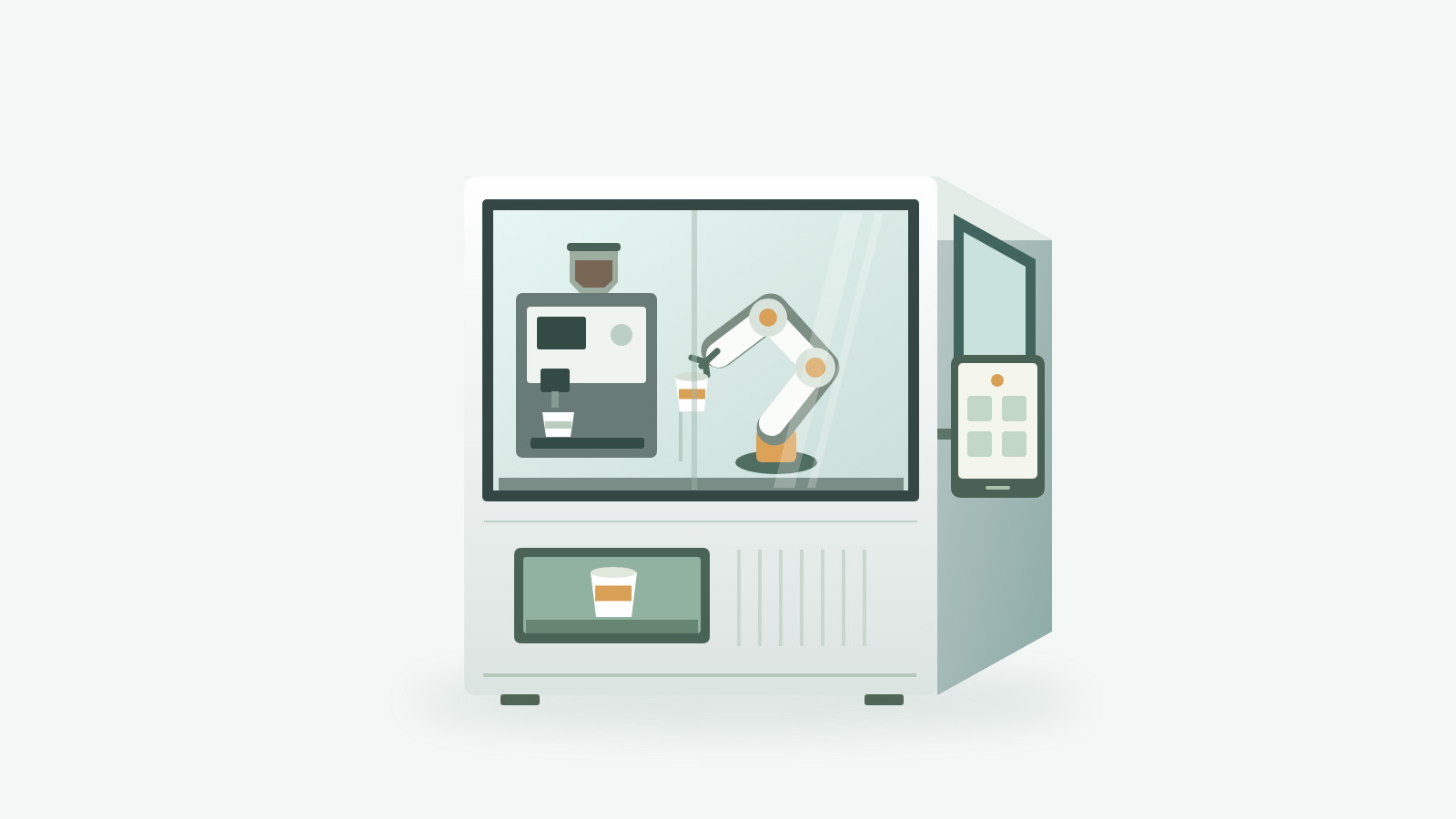
The robot arm gets attention. The purchase order usually depends on less photogenic details: a working payment terminal, a workable cleaning routine and someone who can fix the machine locally.
For an exporter selling a robot coffee kiosk, that gap matters. A buyer can like the demonstration, accept the equipment price and still postpone the order because the operating plan is incomplete.
Imagine the quotation arriving at a distributor's office. The sales manager sees a product that could attract shopping-mall customers. The operator sees a machine that needs stocking and cleaning. The accountant wants to know how many paid drinks will cover the monthly bills. Each person needs a different reason to approve the same purchase.
The accountant starts with cups, not the robot arm
A robot coffee kiosk price becomes useful when the buyer can connect it to a plausible operating budget. The equipment quote is one part of that budget. Freight, import charges, installation, site preparation and initial supplies may add to the amount needed before opening.
Consider a hypothetical site selling coffee for $3.00 per cup. Assume ingredients, cups, lids and payment fees total $1.10 per sale. That leaves $1.90 per cup toward monthly overhead and recovery of the initial investment.
If rent, replenishment and cleaning labor, utilities, software and a maintenance allowance total $1,800 per month, the site needs about 948 cups just to cover those costs. Over 30 trading days, that is roughly 32 cups a day. It has not yet recovered the equipment investment.
At 60 cups a day, the same assumptions leave $1,620 per month after those operating costs. A hypothetical $30,000 initial investment would take about 18.5 months to recover through simple payback, before tax and financing costs, assuming steady sales and no additional expenses.
These are illustrative figures, not a market forecast. Their value is in showing which assumptions the buyer must test. A site open only on weekdays, a landlord charging a share of sales or repeated downtime can change the result substantially.
The operator asks what happens on Monday morning
Who refills the beans and cups? Who empties the waste container? What happens when milk runs low during a busy period?
Fresh-milk systems need suitable refrigeration and a cleaning routine matched to the equipment and local food-safety requirements. Powder-based drinks have different storage and maintenance needs. Automatic cleaning features do not mean the entire kiosk can operate indefinitely without an attendant's visits.
Exporters can make this conversation easier with a sample daily routine and realistic refill information. Reservoir capacity alone is not enough: the drink menu, serving size and ingredient use determine how many sales a refill supports.
The demonstration should also show several consecutive orders. One cup prepared for a promotional video does not reveal what happens when customers queue, select different recipes or request refunds.
The distributor needs an answer after the sale
A card-reader slot does not establish that payments will work in the destination market. The buyer should confirm the supported payment provider, local merchant-account requirements, fees, connectivity and responsibility for failed transactions. A QR code that works in the supplier's showroom may not suit customers overseas.
Service arrangements deserve the same attention. If the kiosk accepts payment but fails to deliver a drink, can the operator identify the fault remotely? Which components can a local technician replace? Are spare parts, service instructions and software support available for the delivered configuration?
Site suitability matters too. An indoor kiosk should not be offered for an outdoor location without checking weather protection, ambient operating limits and the manufacturer's installation requirements. Electrical supply, water, drainage and available floor space can determine whether the planned location is practical at all.
Before asking for the deposit, send a proposal that ties the equipment to the intended site: what is included, what the buyer must arrange and how acceptance will be tested. A demonstration using the agreed menu and payment setup is far more useful than another close-up of the robot arm.
The buyer already knows the machine can attract attention. What they need next is confidence that customers can buy a drink, staff can keep it running and the business can afford to operate it.
robot coffee kiosk price
robot coffee kiosk for sale
robot coffee kiosk outdoor